

Time Travel is Bullsh*t #1 - The Tomorrow War
A microseries critiquing time travel in media.

This will be a bite size dive into the shortcomings, around the premise of time travel in the Tomorrow War.
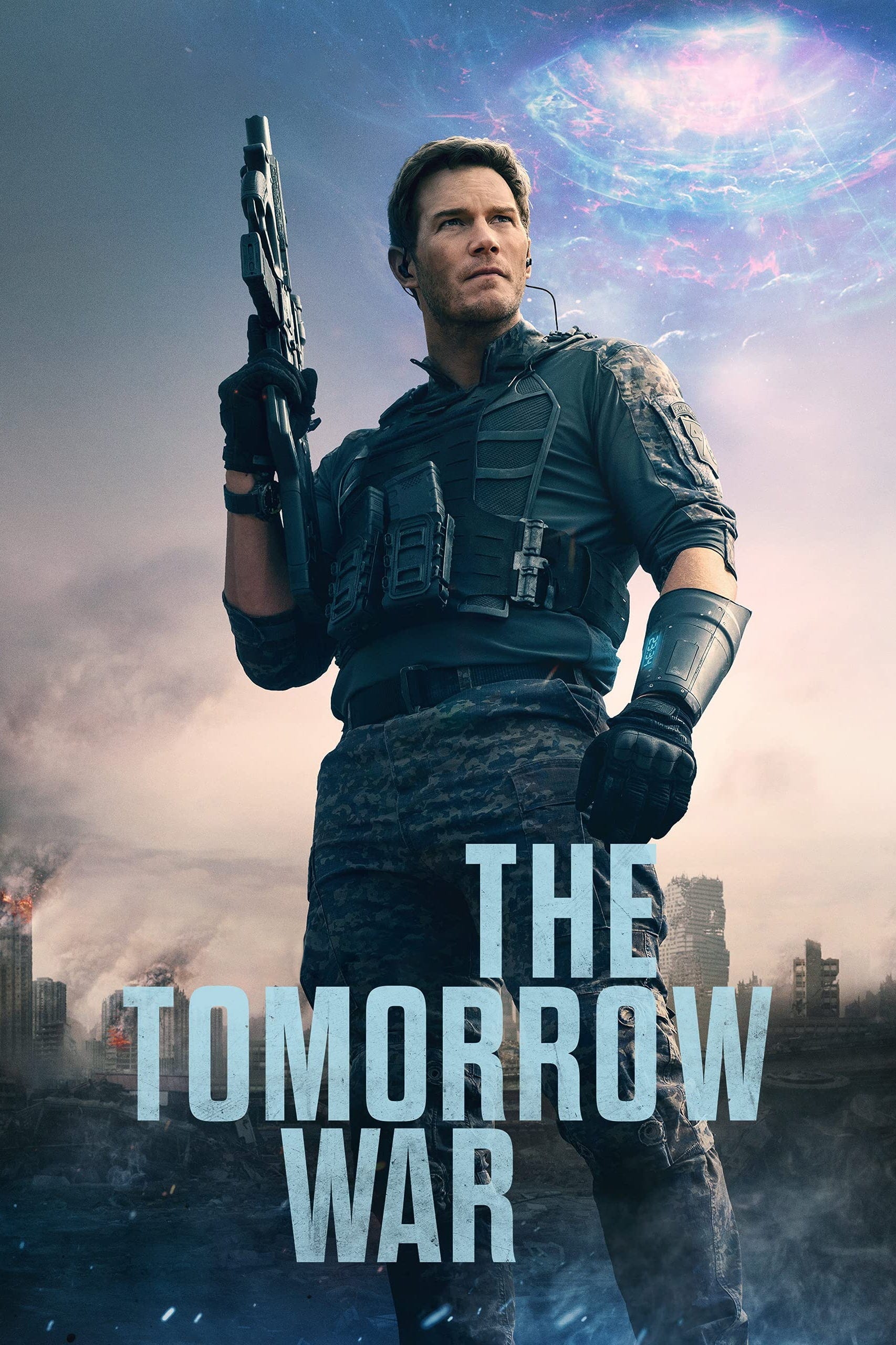
A Brief Overview:
Before diving into the complexities of time travel as depicted in “The Tomorrow War,” let’s set the stage. The film centers around Dan Forester, played by Chris Pratt, a high school teacher and former military operative. The future is in peril due to an alien invasion, and humanity’s last hope is to recruit people from the past to fight in this future war. The narrative oscillates between Dan’s present (the past) and this distant, alien-invaded future.
The Conundrum of Time Travel
Time travel in media has always been a mixed bag – full of fascination, intrigue, and unfortunately, a fair share of head-scratching moments. It often feels like a narrative device that, despite its potential, ends up tangled in its own web of complexities. “The Tomorrow War” serves as a prime example of this predicament.
The Present-Future Paradox
One fundamental issue in “The Tomorrow War” is the treatment of time itself. The film begins in medias res, amidst action, and employs a circular narrative – starting at a point, then circling back to how we got there. This narrative choice, while intriguing, complicates the understanding of time in the film. Technically, the future should be the present, as it’s the furthest point in the timeline we’re shown. However, the narrative focuses on Dan Forester’s perspective, anchored in his ‘present,’ failing to acknowledge that, in a temporal sense, the future is where the ‘now’ really is. If that sounded a bit convoluted, that’s because it is. So I’ll try explaining again.
The crux of the issue in “The Tomorrow War” isn’t just about following the future timeline, but the lack of structure in establishing it as the present. The film fails to clarify or expound on this crucial aspect within its narrative. This omission leaves the viewers grappling with an unanchored timeline, where the ‘future’ is technically the ‘present,’ but without a clear framework to support this concept.
The Death Before War Conundrum
Participants chosen for the future war are those who have died before it begins. The assumption is that their premature deaths in the future won’t impact the timeline since they’re already dead. This logic is, at best, a shaky hypothesis with no real foundation. These people aren’t just dying in the future; they are being removed from their timelines at specific points. The assumption that their removal and subsequent death in the future won’t affect the timeline, just because they die before the war’s onset, is a leap of logic that’s hard to accept. Removing someone from the timeline at any point should have significant implications, something the film fails to address adequately.
Self-Serving Future or Missed Opportunity?
As the narrative unfolds, one wonders if the future’s motive was to provide bodies for their war while preserving the conditions that led to their timeline. This potential plot point, though intriguing, remains unexplored and could have added intentional complexity to the story. The future’s actions towards the past in the film seem reckless and self-serving. This perspective is the only way their actions make sense. The narrative could have delved into this idea, exploring a future desperately trying to preserve its own existence at the past’s expense. This intentional convolution would have added depth to the plot, making the future’s hostile attitude towards the past seem like a calculated move rather than a narrative oversight.
Lessons Learned From “The Tomorrow War,” there are several key takeaways for better handling time travel in storytelling:
Clear Temporal Structure: Establish a clear and coherent structure when dealing with multiple timelines.
Consistency in Rules: Adhere to the established rules of your time travel logic throughout the narrative.
Impact of Timeline Alterations: Acknowledge and explore the consequences of removing characters from their timelines.
Motivations and Consequences: Delve into the motivations of characters involved in time travel and the resulting consequences, especially when these actions span different timelines.
As we continue this series on why “Time Travel is Bull Sh*t,” we’ll further unravel the complexities of time travel in storytelling. Stay tuned for more in-depth analysis and insights into crafting a more cohesive and compelling narrative around this fascinating yet challenging concept.
The Kharlemagne Khronicles is a reader-supported publication. To receive new posts and support my work, consider becoming a free or paid subscriber.